Warm Minimalism: The Complete Guide to 2026's Biggest Interior Design Trend
Warm minimalism is 2026's defining interior trend. Learn what it is, why it works, and how to bring this cozy-yet-clean aesthetic into your home room by room.
Warm Minimalism: The Complete Guide to 2026’s Biggest Interior Design Trend
Minimalism has an image problem. Say the word to most people and they picture a white room with a single grey sofa, bare concrete floors, and zero personality. Cold. Empty. The kind of space that photographs well but nobody actually wants to live in.
That version of minimalism had its decade. And honestly? It deserved to fade.
What replaced it is something far more interesting — and far more livable. It’s called warm minimalism, and it’s quietly become the single most searched interior design aesthetic of 2026. Not because some magazine declared it so, but because people are genuinely tired of choosing between “clean and soulless” and “cozy but cluttered.”
Warm minimalism says: you can have both.
What Warm Minimalism Actually Is
Strip away the Instagram buzzwords, and warm minimalism is a simple idea: keep only what matters, but make sure what stays feels deeply good.
It borrows the bones of traditional minimalism — clean lines, open space, intentional furnishing, no visual clutter. But it replaces the cold materials (chrome, concrete, stark white) with things your body instinctively wants to touch: soft linen, unfinished wood, hand-textured ceramics, thick wool.
The result is a home that breathes. A space with room to think, but also room to curl up with a book and a blanket on a Sunday morning without feeling like you’re ruining the aesthetic.
The Key Differences
| Traditional Minimalism | Warm Minimalism |
|---|---|
| Stark white walls | Warm whites, cream, oat, sand |
| Chrome and glass | Raw wood, brass, matte finishes |
| Hard edges, sharp angles | Soft curves, rounded furniture |
| ”Less is more” (period) | “Less is more, but what stays should have soul” |
| Neutral = grey | Neutral = warm beige, clay, mushroom |
| Decorating feels risky | Every object is chosen with intention and warmth |
Why It Works (The Psychology)
There’s a reason this aesthetic resonates so deeply right now, and it goes beyond trend cycles.
Our homes became our offices, gyms, and restaurants during the pandemic years. That period ended, but the lesson stuck: a home needs to feel like a refuge, not a showroom. Traditional minimalism was impressive to look at. Warm minimalism is comforting to exist in.
Research in environmental psychology backs this up. Warm tones (amber, terracotta, soft gold) activate the parasympathetic nervous system — the “rest and digest” mode. Cool tones (blue-grey, pure white, silver) tend toward alertness. Neither is wrong, but for spaces where you’re trying to decompress, warmth wins.
And the “minimal” part isn’t about deprivation. It’s about clarity. When you remove the excess, the things that remain get to be noticed. That handmade ceramic vase isn’t lost in a sea of knick-knacks. The texture of your linen curtains isn’t competing with eighteen other patterns. Each element gets to breathe — and so do you.
How to Build a Warm Minimalist Room: The 5 Pillars
1. Start With the Color Foundation
Forget everything you know about “minimalist colors.” Your palette isn’t grey. It’s the color of oats, bread crust, wet sand, dried lavender, unglazed clay.
A working warm minimalist palette:
- Walls: Warm white or light cream (never blue-white or pure white)
- Largest furniture: Oatmeal, sand, or warm taupe
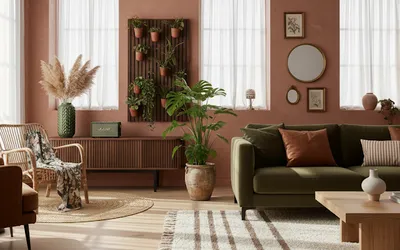
- Accents: Terracotta, olive, muted rust, or deep caramel
- Metals: Brushed brass or matte gold (never chrome)
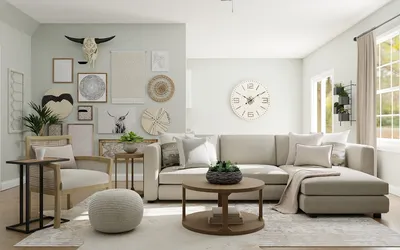
The trick is to keep the overall palette tight — three to four colors maximum — but vary the tones within each color. A cream sofa against a slightly different cream wall, with an oat-colored rug. They’re all “cream,” but the subtle differences between them create depth without chaos.
If you want to go deeper on color selection, we wrote an entire guide on styling clay and terracotta with natural materials.
2. Prioritize Tactile Materials
In warm minimalism, texture does the work that pattern does in maximalist spaces. Every surface should invite touch.
Embrace:
- Linen (curtains, cushion covers, bed sheets)
- Bouclé (accent chairs, throw pillows)
- Natural, unsealed wood (shelving, tables, frames)
- Handmade ceramics (vases, bowls, mugs)
- Wool and cotton throws (casually draped, never too neat)
- Stone and marble (countertops, trays, coasters)
Avoid:
- High-gloss lacquer
- Shiny metals (polished chrome, mirror-finish steel)
- Synthetic velvets or polyester that looks “too perfect”
- Plastic — in any form
The distinction matters more than you’d think. A mass-produced, factory-smooth white vase and a hand-thrown, slightly uneven pottery piece serve the same function. But one of them gives the space warmth and story. The other gives it… nothing.
3. Choose Furniture With Soft Geometry
Sharp right angles are out. That doesn’t mean everything needs to be a blob — it means edges have a radius. Corners are softened, legs are gently tapered or curved, table edges have a bullnose profile.
The reason is both visual and physical. Rounded furniture draws the eye in a flowing motion rather than stopping it abruptly. It makes a room feel friendlier, more approachable. And in small spaces, it genuinely makes movement easier — no more banging your hip on that sharp-cornered coffee table.
Look for:
- Sofas with rounded arms instead of boxy ones
- Round or oval coffee tables
- Dining chairs with curved backs
- Arched floor mirrors
- Kidney-shaped side tables
4. Edit Ruthlessly, Display Intentionally
This is where the “minimalism” part comes back. Warm minimalism isn’t an excuse to fill every surface with pretty things. The warmth comes from the quality and texture of what remains — not from adding more stuff.
A practical rule: every surface should have one “moment” and breathing room around it.
Your console table might have a ceramic vase with dried bunny tails, a small stack of two books, and nothing else. Your coffee table might have a single candle on a stone tray. Your bedside table: a lamp and a book.
The negative space around each object is what makes it feel intentional rather than cluttered. The moment you add a fourth item to a surface, pause and ask: does this earn its place?
5. Layer Your Lighting
Overhead ceiling lights — especially the default LED panels in most apartments — are the number one enemy of warm spaces. They flatten everything, wash out textures, and make even the most beautiful room feel institutional.
Warm minimalism lives and dies by layered lighting:
- Ambient: A warm-toned pendant light (2700K, never cool white) for general illumination
- Task: A reading lamp by the sofa, a desk lamp in the workspace
- Accent: A candle cluster on the coffee table, a simple LED strip behind a shelf
- Natural: Keep windows unblocked during the day — sheer curtains maximum
The warmth of your lighting temperature matters enormously. Stick to 2700K to 3000K for living spaces. Anything above 4000K will make a warm interior feel awkward and contradictory. This isn’t subjective — it’s physics. Warm light enhances warm tones. Cool light kills them.
Room-by-Room Quick Guide
Living Room
Start with a rounded-arm sofa in oatmeal or warm grey. Add a solid wood coffee table with a single decorative tray. Linen curtains. One statement floor lamp with a fabric shade. A jute or wool rug. Done.
Bedroom
Linen bedding in cream or sand. Two simple bedside lamps (ceramic base preferred). A low wooden headboard or a large piece of textured art above the bed. One throw blanket, casually draped. No gallery wall — let the bed be the focal point.
Kitchen
Warm wood open shelving instead of upper cabinets (if possible). Stoneware dishes on display. A few ceramic canisters. Matte brass or brushed gold hardware. Natural stone countertops or a warm butcher block.
Bathroom
Warm stone tiles or large-format tiles in cream. A round mirror (not rectangular). Brass fixtures. Folded linen towels in a basket instead of a towel bar. One plant (pothos or fern).
Common Mistakes to Avoid
Going too matchy. If your sofa, rug, and curtains are all the exact same shade, the room reads as flat, not warm. Introduce subtle tone variations.
Forgetting contrast. An all-cream room needs a grounding element — a dark wood shelf, a charcoal cushion, a deep olive plant pot. Without contrast, warmth becomes blandness.
Over-styling for photos. Warm minimalism should look lived-in, not staged. If you wouldn’t leave it arranged that way on a normal Tuesday evening, it’s too precious.
Treating it as a one-time project. These spaces evolve. You’ll find a better vase at a local market. You’ll realize that shelf needs one fewer thing. The “editing” never really stops, and that’s part of it.
Where Warm Minimalism Overlaps With Other Styles
If you’ve been drawn to Japandi living room aesthetics or the warmth of limewash textured walls, warm minimalism is their shared foundation. Think of it as the umbrella — Japandi and Wabi-Sabi are specific expressions of the same underlying philosophy.
The beauty of warm minimalism is that it adapts. Add Indian handloom textiles and brass temple bells, and it leans traditional. Add clean Scandinavian lines and pale birch wood, and it leans Nordic. The framework holds regardless of your cultural aesthetic.
The Bottom Line
Warm minimalism isn’t a trend that’s going to look dated in two years. It’s a return to something fundamental — the idea that your home should feel calm, intentional, and welcoming before it tries to be anything else.
The “trend” part is just the name. The reality is older than any of us: people have always wanted homes that feel like a warm exhale at the end of a long day.
Ready to start editing your space? Check out 7 design mistakes that make your room look smaller — many of them clash directly with warm minimalism principles.
Want personalized guidance? Book a consultation with our design team.