Limewash Living Rooms: Warm, Textured & Calm (2025 Guide)
Limewash walls bring depth, texture and old-world charm to any living room. Colour picks, application tips, furniture pairings and shoppable essentials inside.
You know the look—those walls that seem to glow softly from the inside, looking chalky, layered, and beautifully imperfect. That’s limewash. And honestly, once you see it in person, regular flat paint starts to look a bit lifeless.
I’ve been slightly obsessed with this finish for a while. It hits that perfect sweet spot between “expensive European villa” and “I could actually pull this off on a Saturday.” The texture is subtle, but it completely changes how a living room feels—making it softer, calmer, and more grounded. If you want that lived-in, designer-curated vibe without hiring a professional, limewash is your ultimate shortcut.
Why Limewash is More Than Just a Trend
It might feel like limewash has suddenly taken over our feeds, but it’s actually been around for centuries (think ancient Italian farmhouses and Greek island cottages). It has returned to mainstream design for a few very practical reasons:
- It hides wall imperfections: Small cracks, uneven plaster, and patchy drywall disappear under limewash. It works with the flaws rather than exposing them.
- It reacts to light: Morning sun makes a limewash wall look warm and golden. Evening lamplight turns it moody and deep. It’s like having walls that shift with the day.
- It ages gracefully: Unlike flat paint that scuffs and looks sad, limewash develops a natural patina over time.
- It feels natural: The matte mineral texture feels warm and velvety to the touch, unlike cold, plastic-based acrylic paints.
Choosing Your Limewash Color
This is where a lot of people get stuck. Here is my advice on keeping it simple:
The Warm Neutrals (The Safe Bet)
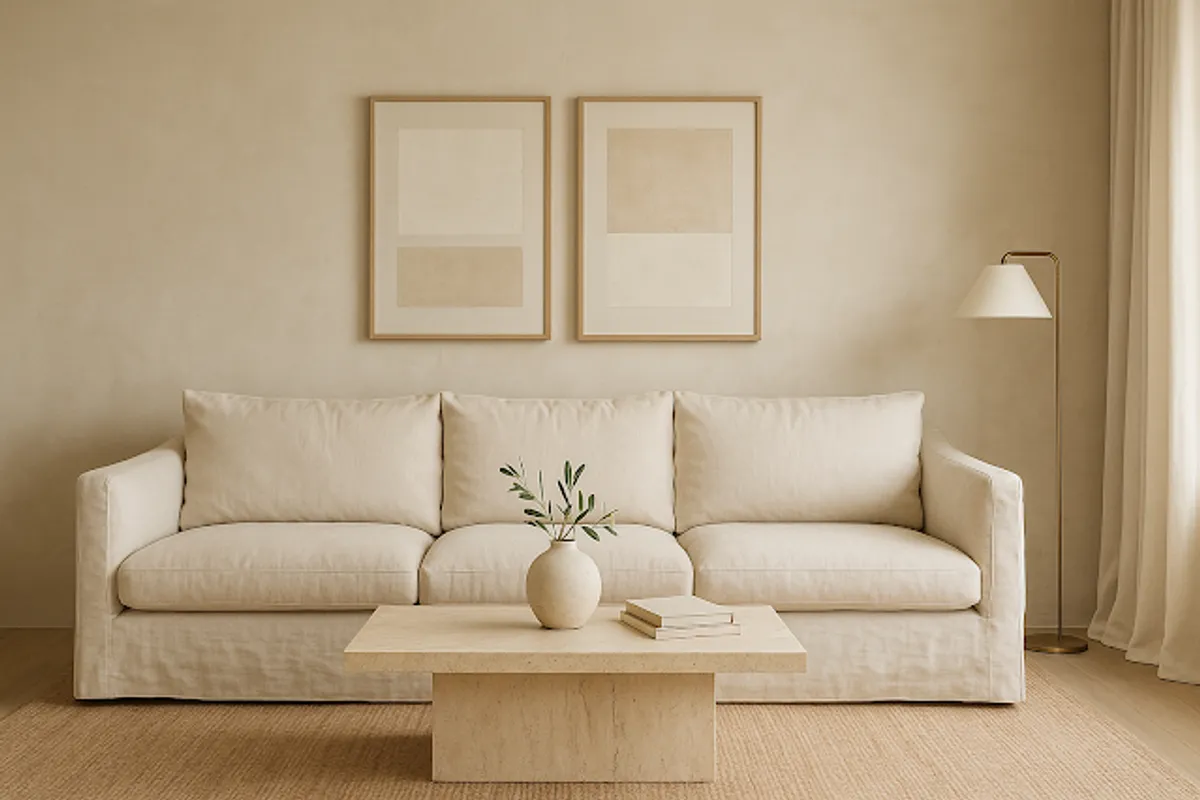
Putty, bone, oatmeal, and greige are the shades that make a living room feel like a warm hug. Layering similar neutral tones lets the light shift gently across the wall throughout the day.
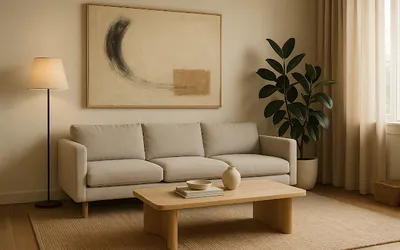
My favorite combination: A warm putty-toned limewash paired with light oak floors and natural linen curtains. It’s incredibly simple, yet it looks expensive every time.
The Moody Shades (For the Bold)
If you want to try sage green, dusty terracotta, or warm charcoal, limewash is the perfect medium. The mineral base softens the pigment, meaning even a very dark color feels soft and inviting rather than cave-like. I’ve seen a deep olive green limewash used in a small living room that actually made the space feel larger and more cozy.
How to Style a Limewash Living Room
Because limewash has a matte, mineral texture, you want to pair it with materials that offer a nice contrast:
- The Flooring: Layer a chunky jute rug on the floor. The rough, organic weave against the smooth, chalky wall is a perfect texture pairing.
- The Metals: Choose blackened bronze or aged brass. Avoid chrome or polished steel—they feel too cold and clinical next to the organic walls.
- The Fabrics: Go heavy on linen. Linen curtains that pool slightly on the floor diffuse natural light beautifully.
- The Accents: Bring in natural stone like travertine side tables or tumbled marble trays. Because stone and limewash share the same mineral DNA, they look incredibly cohesive together.
- The Wood: Mix in a few weathered oak or dark walnut pieces to ground the room and add visual weight.
A Beginner’s Guide to Applying Limewash
It’s not difficult to apply, but the process is different from regular paint. Skip the prep work and you’ll end up redoing it. Here is the step-by-step method that works:
- Prep the Wall: Patch any holes, sand down rough spots, and wipe away dust. Limewash needs a clean, porous surface to grip properly.
- Apply the Primer: Glossy surfaces or drywall patches need a specialized mineral primer so the limewash absorbs evenly.
- The First Coat (Get Messy): Dampen the wall slightly with a spray bottle first. Using a wide masonry brush, apply the limewash in random, overlapping “X” strokes. If you try to paint in neat, straight lines, it won’t look right. The variation is the goal.
- Let it Dry: Be patient. Let the first coat dry completely—ideally overnight.
- The Second Coat: Apply a lighter second coat using less product on your brush, filling in any gaps. This is where the depth and cloud-like texture will start to show.
Three Quick Tips for Success:
- Work in small sections: Tackle a 3-to-4 foot area at a time so your edges stay wet. If the paint dries where you overlap sections, you’ll see harsh lines.
- Feather the edges: Lighten your brush pressure around outlets and baseboards so you don’t get a halo effect.
- Step back often: Actually walk across the room every ten minutes to look at the overall pattern. It’s much easier to adjust your strokes while the paint is still wet.
Key Differences at a Glance
| Limewash | Regular Paint | |
|---|---|---|
| Finish | Velvet-like, mineral, textured | Flat, uniform, plastic-base |
| Durability | Absorbs marks, develops patina | Shows scuffs and scrapes |
| Touch-ups | Easy to blend with a damp brush | Requires painting the whole wall |
| Application | Hand-painted brush strokes | Rolled or sprayed |
Final Thoughts
Think of limewash as a design element, not just a wall color. It adds a layer of quiet luxury and history to a living room that flat paint simply cannot replicate.
If you’re nervous, start with a small feature wall or a powder room. The beauty of this technique is that you don’t have to be perfect—the imperfections are exactly what make it work.
Shop the Look
As an Amazon Associate, I earn from qualifying purchases.