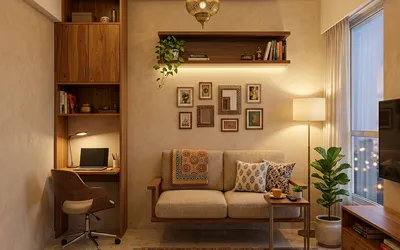
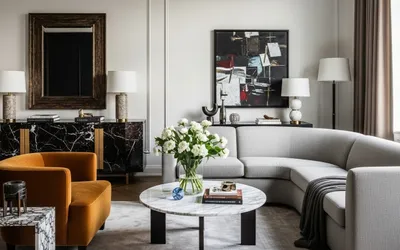
7 Interior Design Mistakes That Make Your Room Look Smaller (And How to Fix Them)
Avoid these 7 common interior design mistakes that shrink your space visually. Simple, budget-friendly fixes that make any room feel bigger instantly.
7 Interior Design Mistakes That Make Your Room Look Smaller (And How to Fix Them)
There’s a moment that hits everyone at some point — you walk into your room, look around, and wonder: when did this place get so cramped? The furniture hasn’t changed. The walls haven’t moved. But somehow, the room feels like it’s closing in on you.
Here’s the thing most people don’t realize: the room isn’t the problem. Nine times out of ten, it’s the design decisions — small, seemingly harmless choices — that are eating up your visual space. And the good news? Every single one of them is fixable, usually without spending much money at all.
We’ve walked into hundreds of homes at Mitti & Moss, and these seven mistakes show up constantly. Let’s go through them.
1. Pushing All Your Furniture Against the Walls
This one surprises people the most. The instinct makes perfect sense — if you push everything to the edges, you free up floor space in the middle. More open floor, bigger room. Right?
Not quite.
When every piece of furniture lines the walls, you create a bowling alley effect. The eye sees a ring of furniture with an awkward void in the center, and paradoxically, the room feels less intentional and more cramped.
The fix: Pull your sofa forward by even 15-20 centimeters. Place a slim console or a low bookshelf behind it. This creates distinct “zones” within the room — a seating area, a walkway, a reading corner — and each zone makes the space feel purposeful rather than accidental.
You don’t need a massive room for this. Even a 10x12-foot living room benefits enormously from floating the sofa just slightly off the wall.
2. Using Dark, Heavy Curtains That Stop at the Window Frame
Curtains are one of the most underestimated design elements in any room. Most people buy curtains that match the exact width of their window and hang them right at the frame. The result? Your window looks small, your wall looks chopped up, and the room loses height.
The fix: Two rules that change everything:
- Hang the curtain rod 15-20 cm above the window frame — as close to the ceiling as possible. This tricks the eye into thinking the window (and therefore the wall) is taller than it actually is.
- Extend the rod 15-20 cm beyond the window on each side. When you open the curtains, the fabric stacks over the wall, not the glass. More visible glass means more light, and more light always equals a bigger-feeling room.
For fabric, go lighter than you think you need. Sheer linens or light cotton in warm neutrals work beautifully — they let light through while still giving you privacy. Save the heavy velvets for larger rooms where you want that dramatic, cocooning feel.
3. Choosing Furniture That’s the Wrong Scale
This mistake comes in two flavors, and both are equally damaging.
Too-large furniture is the obvious one. That oversized sectional sofa that looked perfect in the showroom? Showrooms have 20-foot ceilings and professional lighting. In your 10x12 living room, it devours the space.
But too-small furniture is just as problematic — and people rarely talk about it. When you fill a room with lots of tiny pieces (small side tables, narrow chairs, petite shelving), the room looks cluttered and fussy, even if there’s technically floor space available.
The fix: Choose fewer pieces, but make sure each one is proportionally right. A good rule of thumb: your sofa should be roughly two-thirds the length of the wall it faces. Your coffee table should be about two-thirds the length of the sofa. And leave at least 45 cm of walking space around major furniture.
One well-proportioned armchair does more for a room than three undersized stools.
4. Ignoring Vertical Space Entirely
Most people decorate from waist height down. Furniture sits on the floor, maybe a shelf at eye level, and everything above that is dead space — blank wall stretching up to the ceiling.
This makes the room feel like a low box. Your eye has nowhere to go but side to side, which emphasizes the room’s actual dimensions (usually, its smallness).
The fix: Direct the eye upward.
- Tall, narrow bookshelves that reach toward the ceiling
- Art or mirrors hung slightly higher than feels natural (center at about 160 cm from the floor)
- Vertical-pattern wallpaper on one accent wall
- Floor-to-ceiling curtains (as mentioned above)
- Pendant lights that draw the eye up instead of table lamps that keep it low
I’ve seen rooms that felt claustrophobic completely transform just by adding one tall bookshelf and moving the art six inches higher. The ceiling didn’t change, but the room felt like it gained a foot of height.
5. Over-Matching Everything
You picked a grey sofa, so now the cushions are grey, the rug is grey, the curtains are grey, and the wall art has — you guessed it — grey accents. Everything “goes together,” and the room looks… flat. Lifeless. And strangely, smaller.
When everything is the same color and material, the eye can’t distinguish one thing from another. The room becomes a blur of sameness, and without visual breaks, there’s no sense of depth or dimension.
The fix: Think in contrasts, not matches. Keep a cohesive color story — say, a warm neutral base — but vary the textures and tones within it. A cream linen sofa, a jute rug, a terracotta cushion, a wooden side table, a brass lamp. They all belong to the same “warm, earthy” family, but each one gives the eye something new to land on.
This creates visual layers, and layers are what make a space feel three-dimensional and expansive. For more on building a cohesive-but-varied palette, see our guide on how to style clay and terracotta into modern homes.
6. Neglecting Mirrors and Reflective Surfaces
This isn’t about slapping a mirror on every wall and calling it a day. But the complete absence of reflective surfaces is a missed opportunity that we see in almost every small room we consult on.
Mirrors work because they do two things simultaneously: they bounce light into dark corners, and they create the illusion of depth by reflecting the room back on itself. A well-placed mirror can make a room feel nearly twice its actual size.
The fix:
- Living rooms: A large mirror (at least 60x90 cm) on the wall opposite your biggest window. It reflects the outdoor view and doubles the natural light.
- Bedrooms: A floor-length mirror leaning against a wall adds depth without requiring any mounting.
- Hallways: Mirrors on the long wall make a narrow corridor feel wider.
- Any room: Furniture with reflective elements — a glass coffee table, a metallic lamp base, a lacquered tray — adds subtle light-bouncing without looking like a mirror showroom.
The key is placement. A mirror reflecting a cluttered corner doesn’t help. Position it so it reflects something worth seeing — a window, a piece of art, or an open doorway.
7. Blocking Natural Light
This is the silent killer of spatial perception. I’ve walked into apartments with generous windows that felt like caves because the owners had:
- Heavy, opaque curtains pulled shut most of the day
- Tall furniture placed directly in front of windows
- Dark-colored walls that absorbed whatever light did come through
- Overgrown balcony plants blocking the glass entirely
Natural light is the single biggest factor in how large a room feels. Two identical 10x10 rooms will feel completely different if one gets abundant daylight and the other doesn’t.
The fix:
- Switch to sheer or semi-sheer window treatments
- Keep furniture at least 30 cm away from windows
- Use lighter wall colors on the wall with windows — warm whites, soft creams, pale sage
- If you have balcony plants, prune them so they frame the window instead of covering it
- Clean your windows (seriously — the difference is shocking)
If your room faces north and natural light is genuinely limited, compensate with warm artificial lighting placed at multiple heights. A single overhead light creates harsh shadows. But a floor lamp in the corner, a table lamp on the console, and a pendant light create gentle, layered illumination that opens the space up.
The Underlying Principle
If you notice a pattern here, that’s intentional. Every mistake on this list comes down to the same root cause: blocking the eye from moving freely around the room.
Small rooms feel oppressive when your vision hits barriers — furniture too close together, walls that all look the same, curtains that chop the window, empty upper walls that box you in.
Big rooms feel expansive because your eye can travel — across textures, up to the ceiling, through reflected light, into visual depth.
You don’t need a renovation. You don’t need to knock down walls. Most of the time, you just need to give the eye somewhere to go.
Working with a compact space and need a game plan? Start with our post on interior design trends for 2025 for inspiration — many of them are tailor-made for smaller homes.
Have a room that’s driving you crazy? Reach out to us — sometimes a fresh pair of eyes is all it takes.