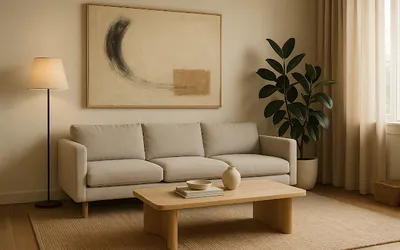
Small Living Room Ideas 2026: 15 Designer-Approved Ways to Maximize Your Space
15 practical, designer-tested ideas to make your small living room feel spacious, stylish, and functional in 2026. No renovation needed.
Small Living Room Ideas 2026: 15 Designer-Approved Ways to Maximize Your Space
A 10x12-foot living room. A 2BHK apartment in a city where rents are climbing and square footage is shrinking. A house where the “living room” is really a passageway between the front door and the kitchen.
Sound familiar?
Here’s what I’ve learned after designing hundreds of compact living spaces: the size of a room matters far less than you think. What matters is how the room is organized, lit, and furnished. I’ve seen 150-square-foot living rooms that feel generous and 300-square-foot ones that feel suffocating. The difference is never the room. It’s the decisions.
These 15 ideas aren’t Pinterest fantasies — they’re practical techniques we use on real projects, in real apartments, for real people who need their living room to actually work for daily life, not just look good in a photo.
Layout & Furniture Placement
1. Float Your Sofa
Stop pushing furniture against walls. Seriously. I know it feels counterintuitive — “if I move the sofa forward, I lose floor space.” But what you gain is infinitely more valuable: defined zones, better flow, and a room that looks intentional instead of like a waiting room.
Pull the sofa 15-20 cm forward. Place a slim console or narrow shelf behind it. Now you have a “seating zone” and a “behind the sofa” zone. The room has dimension instead of a ring of furniture around an empty void.
We covered this in detail in our post on design mistakes that make rooms look smaller — it’s mistake #1 for a reason.
2. Ditch the Full Sofa Set — Use a Mix
The three-piece sofa set (3-seater + 2-seater + single chair, all matching) is one of the worst things to happen to small Indian living rooms. Three massive, identical pieces eat the entire room.
Instead: one well-sized sofa (two-seater or compact three-seater) paired with two different accent chairs. The mismatched seating actually looks more sophisticated, takes up less visual weight, and gives you flexibility to rearrange.
3. Choose Leggy Furniture
Furniture with visible legs — whether tapered wood or slim metal — lets you see the floor beneath it. This continuity of visible floor makes the room feel larger.
Avoid furniture that sits directly on the ground with a solid base. Heavy, boxy pieces that touch the floor create visual “blocks” that stop the eye.
A sofa with 15 cm legs and a coffee table with visible legs can make a room feel 10-15% larger than the same pieces without legs. It sounds minor until you see it side by side.
4. Replace the Coffee Table With an Ottoman or Nesting Tables
A solid rectangular coffee table dominates the center of a small room. Try alternatives:
- A round ottoman: Doubles as extra seating, can be moved around, no sharp corners in tight spaces
- Nesting tables: Use one when you need a surface, tuck the rest away when you don’t
- A narrow, long console: Pushed against the back of the sofa instead of sitting in the center
The goal is flexibility. In a small room, every piece needs to earn its square footage.
Light & Color
5. Use the Ceiling as Your Fifth Wall
In small rooms, people decorate the four walls obsessively and completely ignore the ceiling. But vertical space is the one dimension where small rooms often match large ones — your ceiling height is probably the same 9 or 10 feet as in a supposedly bigger apartment.
Use it:
- Floor-to-ceiling curtains (mount the rod at the ceiling line, not the window frame)
- A single statement pendant light that draws the eye up
- Tall bookcases or shelving units
- Vertical art arrangements (two frames stacked, not placed side by side)
Your eye follows the direction you lead it. Lead it upward, and the room grows.
6. Paint the Accent Wall Strategically
An accent wall can help or hurt — it depends which wall you choose.
Best choice for small rooms: The wall farthest from the entrance. A slightly deeper tone here (warm clay, sage, soft terracotta) creates visual depth, making the room feel like it extends further than it does.
Worst choice: The wall immediately inside the door. A dark color here feels like the room is pushing you backward.
7. Embrace One Large Mirror
One generously sized mirror (at least 60x90 cm) on the wall opposite your window. It reflects daylight, creates an illusion of depth, and effectively “doubles” the visual space.
Two important rules: the mirror should reflect something pleasant (the window, a plant, art — not a messy hallway), and avoid multiple small mirrors. One large mirror tricks the brain. Five small mirrors just look like decor.
8. Layer Three Lighting Sources
Kill the single overhead tube light. Nothing flattens a room faster.
Instead, use three layers:
- One pendant or ceiling fixture (warm tone, 2700K)
- One floor lamp in a corner (creates depth through shadow)
- One table lamp on a sideboard or console
This layered lighting creates pools of warm light and gentle shadow, which gives the room dimensionality. A single overhead light removes all shadow and makes the room feel like a box.
Storage & Organization
9. Go Vertical With Storage
Floor space is premium. Wall space is often wasted. The math is simple.
Wall-mounted shelves, tall narrow bookcases, and floating units above doorways — all of these add serious storage without touching the floor. In small rooms, storage should go up, not out.
A full-height bookcase (touching or nearly touching the ceiling) actually makes a room feel taller, even though it’s taking up wall space. The upward movement overrides the visual weight.
10. Choose Furniture With Hidden Storage
This is non-negotiable in small spaces:
- Ottoman with internal storage — blankets, remotes, magazines disappear inside
- Sofa with under-seat drawers — seasonal items, board games
- Console table with drawers — the junk that otherwise lives on every surface
- Lift-top coffee table — laptop workspace that tucks away
The less clutter visible on surfaces, the more spacious the room feels. And in small spaces, every square centimeter of hidden storage is gold.
11. Use Baskets and Closed Containers Instead of Open Display
Open shelving looks beautiful in styled photos. In real life, in a small room, it creates visual noise.
Use baskets (woven seagrass, jute, or fabric) to contain categories of items on open shelves. Three matching baskets look calm and intentional. Thirty exposed items look like a storage unit.
Smart Decor Choices
12. Pick One Statement Piece, Not Ten Small Ones
A common instinct in small rooms: use small decor because the room is small. But filling a compact space with many tiny objects creates visual clutter and makes the room feel like a gift shop.
Instead, choose one strong focal point:
- One large piece of art (at least 60x80 cm)
- One striking floor plant (a fiddle leaf fig, a monstera, a tall snake plant)
- One beautiful sculptural vase
Let that single piece command attention. Everything else can be subtle and supportive.
13. Use Consistent, Calm Colors Throughout
Save the bold pattern mixing for larger rooms. In small spaces, a cohesive color story — warm neutrals with one accent color — keeps the eye moving smoothly without visual interruptions.
This doesn’t mean boring. A room in cream, oat, and terracotta with varied textures (linen, jute, wood, ceramic) is rich and interesting. It just isn’t chaotic. For small spaces, calm always reads as spacious, and the warm minimalism approach is practically designed for this.
14. Let the Floor Breathe
In a small room, the more floor you can see, the bigger the room feels. This means:
- One rug that fits the seating area (not wall-to-wall carpet)
- No floor-level clutter (baskets, plants, shoes — find them elevated homes)
- Furniture with visible legs (see #3)
A good target: you should be able to see at least 30-40% of the floor surface when standing at the entrance. If you can’t, something needs to move up or out.
15. Edit. Then Edit Again.
This is the hardest one, and the most impactful. Walk into your living room and look at it with fresh eyes. How many items are in the room? Now ask: which ones earn their space?
The decorative pillow that’s always on the floor because nobody likes it? Remove it. The console table with seven framed photos? Keep two. The stack of magazines from 2024? Recycle them.
Every item you remove gives the room back a little bit of breathing room. In a 150-square-foot space, removing five unnecessary objects can genuinely shift how the room feels.
A Quick Note About Indian Urban Apartments
Most global “small living room” advice assumes a room with one or two purposes. Indian living rooms routinely serve as the TV room, the guest hosting area, the kids’ homework spot, the extra dining space during festivals, and the place where relatives sleep when they visit.
This multi-use reality means flexibility isn’t optional — it’s the entire strategy. Every piece of furniture should be movable, modular, or multipurpose. A pouf that becomes extra seating. A foldable side table for chai. A sofa bed for overnight guests.
Design for the five different versions of your living room, not just the one you photograph.
These ideas scratch the surface. For deeper guides on designing compact spaces, explore our posts on design mistakes that shrink rooms and warm minimalism for small homes.
Working with a particularly challenging space? Send us your floor plan — tricky rooms are our favorite kind.