Japandi Bedroom Trends 2025: Calm Oasis with Warm Neutrals
Create a Japandi bedroom that calms you the moment you walk in. Warm neutrals, organic shapes, low platform beds and layered linen — a practical 2025 guide.
You know that feeling when you walk into a room and your shoulders physically drop? That’s exactly what a Japandi bedroom is designed to do. It’s not just about looking clean—it’s about creating a space that actively slows your heart rate the moment you cross the threshold.
I love this style because it solves the ultimate design paradox. Pure Japanese minimalism can sometimes feel a bit cold—almost clinical. On the flip side, Scandinavian hygge can easily slide into clutter-cozy territory. Japandi sits right in the sweet spot: clean but warm, simple but incredibly textured. Best of all, it doesn’t chase passing trends. It ages beautifully.
Why Warm Neutrals Beat Cool Greys Every Time
When people think “minimalist bedroom,” they often immediately picture stark white walls and grey bedding. It ends up looking more like a dentist’s waiting room than a sanctuary.
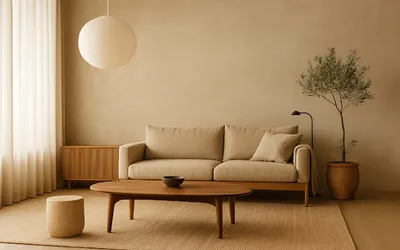
In a Japandi space, warm neutrals are your best friend because they absorb light rather than bouncing it harshly around the room. Shades like soft beige, mushroom, oat, and warm clay quiet a room down. Cool greys tend to feel corporate under artificial lighting, and since your bedroom is primarily used at night, warm tones just make sense.
My Go-To Palette Rules:
- Walls: Opt for a soft mushroom or oat off-white. Stark white is too bright; that extra degree of warmth makes all the difference. Always paint a sample on two different walls and check them at morning and evening. Light shifts dramatically, and what looks clean at noon can look slightly pink or green at sunset.
- Furniture: Lean toward light oak, birch, or ash. The natural wood grain adds visual interest without adding color noise.
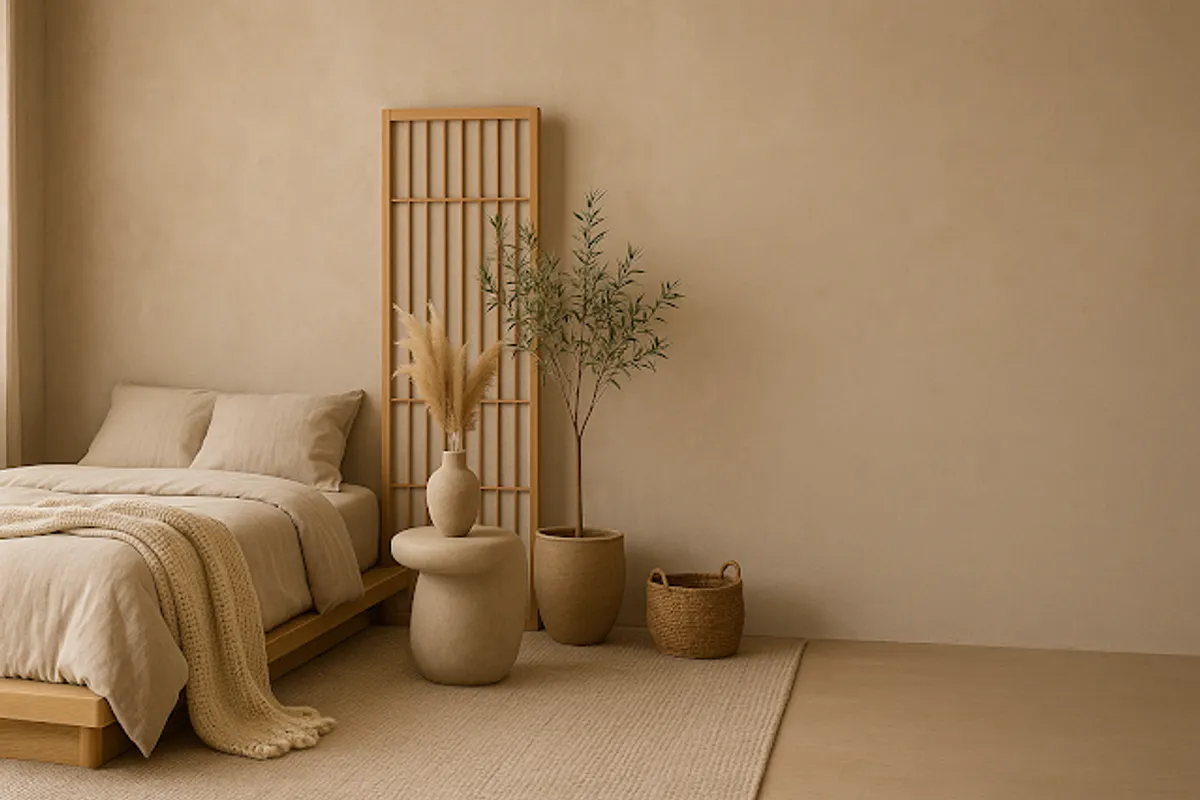
- Upholstery: Choose textures like stone, sesame, or oatmeal. Focus on fabrics with a visible, tactile weave like linen or bouclé.
- Accents: Bring in hand-thrown ceramics, rattan, and woven baskets to echo the earthy palette across the room.
The goal is to create a visual landscape where nothing screams for attention. Everything just coexists quietly.
The Art of Layering Textiles
A minimalist bed with a single flat duvet and two flat pillows looks sad and unfinished. The secret to making a simple bedroom feel cozy is texture layering.
Here is my favorite formula for a perfectly styled, effortless bed:
- The Base: Start with a soft linen duvet set in oat or stone. Linen has a natural drape that does 70% of the styling work for you.
- The Layer: Add a chunky knit throw draped across the lower third of the bed. Don’t fold it too neatly. The Japanese philosophy of wabi-sabi celebrates imperfection—so toss it, let it bunch naturally, and let it look like a real human actually sleeps there.
- The Accents: Limit yourself to two or three accent pillows in subtle weaves or textured bouclé. Say goodbye to the giant decorative pillow mountain.
- The Lighting Filter: Frame the windows with floor-length linen curtains that pool slightly on the ground.
Keep patterns to a minimum. The visual interest should come from the weight and feel of the materials, not prints. When your eye isn’t busy processing busy patterns, your brain can actually rest.
Organic Shapes vs. Clean Lines
Straight lines create order, but curves bring ease. A good Japandi bedroom needs a balance of both. If you only use clean, rectangular furniture, the room will feel stiff.
Try introducing curves in these areas:
- The Headboard: A bed frame with a rounded or arched headboard instantly softens the back wall.
- The Nightstands: Swap a square nightstand for a pebble-shaped side table to break up the hard angles.
- The Rug: A round or oval wool rug under the bed changes the way you move through the space.
- The Decor: Display irregular, handmade ceramic vases that look like wind-worn stones.
You don’t want a room full of round objects. The magic happens when you interrupt clean, straight lines with organic forms so the space feels natural, not over-designed.
Layout: Let the Room Breathe
It’s common to want to fill empty corners because blank spaces make us feel like a room is unfinished. In Japandi design, however, negative space is a deliberate choice.
Place your bed first, give it breathing room on both sides, and then ask yourself what you actually need to add:
- The Anchor: A minimalist oak bed frame with a low profile makes the ceilings feel higher.
- Clutter Control: Use closed nightstands or lidded baskets. Open shelving in a bedroom is an invitation for visual clutter.
- Flow: Keep walkways entirely clear. If you’re dodging furniture at 3 AM, the room is too crowded.
- Vertical Lines: Use low, wide dressers rather than tall chests to keep the visual horizon line low and open.
Choosing Materials that Age Beautifully
Invest in materials that get better with time. Synthetic materials degrade; natural materials develop a beautiful patina.
- Light Oak + Creamy Linen: The ultimate pairing for warmth and simplicity.
- Travertine + Wool: Brings a lovely, grounded contrast to nightstands and dressers.
- Blackened Bronze + Warm Wood: Gives you a touch of modern contrast without feeling cold.
Avoid high-gloss finishes. Shiny surfaces create glare, which disrupts the calm. Stick to matte, oiled, or waxed woods that feel natural to the touch.
Getting the Lighting Right
Harsh overhead lighting is one of the most common design mistakes. It’s functional for folding laundry, but it ruins the evening mood.
Try layering your light sources instead:
- Ambient Light: Use paper or linen pendants to diffuse light softly. A classic rice paper lantern is a staple for a reason.
- Task Light: Place warm-white bulbs (2700K temperature) in your bedside lamps.
- Accent Light: Run a low-voltage LED strip behind your headboard to softly highlight textured walls or limewash paint.
And if you can, install dimmer switches. Being able to drop the lights to 20% in the evening is a game-changer for winding down.
A Quiet Space to Recharge
A Japandi bedroom isn’t about buying a specific list of products or copying a Pinterest photo exactly. It’s about subtracting until only what is functional and beautiful remains.
Start with a warm paint tone, layer in natural textiles, soften the angles with a curved piece or two, and then—the hardest part—stop adding things. Let the space breathe. That empty corner isn’t a problem to be solved; it’s the reason the room feels so good.
Shop My Japandi Bedroom Favorites
- Soft linen duvet set in natural oat
- Chunky knit throw for cozy texture
- Pebble-shaped side table
- Minimalist oak bed frame
As an Amazon Associate, I earn from qualifying purchases.